
Website UX/UI
Page structures and responsive interfaces for clear content and conversion journeys.
Research-informed flows and polished interfaces that help people understand, navigate, and use digital products with less friction.
UX/UI design connects what users need to do with how a digital product behaves and feels. Good interface work makes complexity manageable, gives actions a clear hierarchy, and creates consistency across screens.
We move from goals and user journeys into wireframes, prototypes, interface design, and reusable systems. Design decisions are documented with implementation in mind, helping product and development teams move forward with clarity.
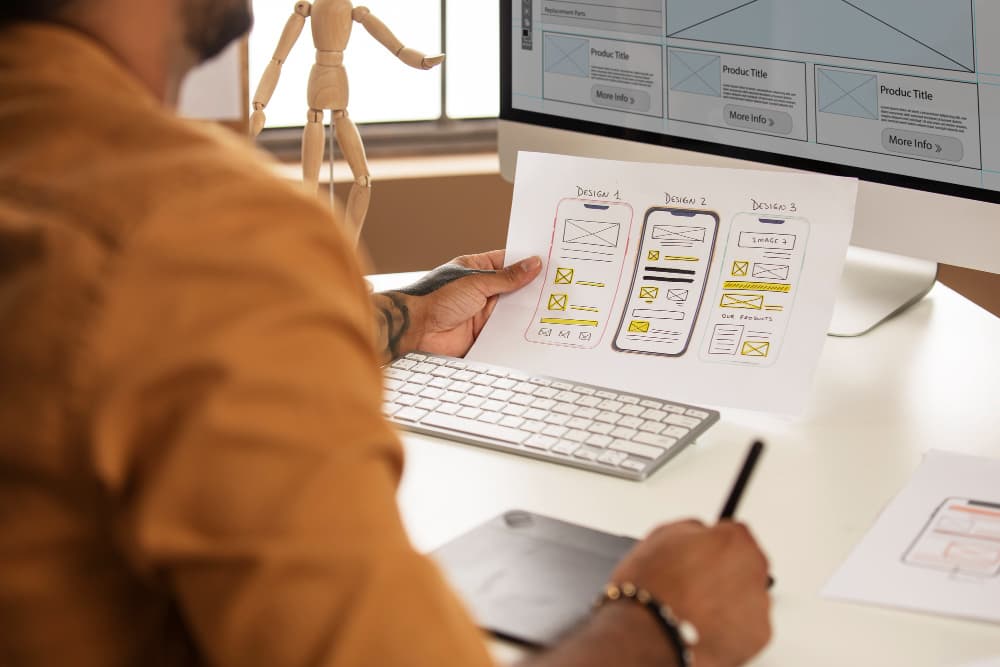
The scope is shaped around the problem, users, and priorities—not a fixed package of unnecessary features.
Page structures and responsive interfaces for clear content and conversion journeys.
Task-focused screens for dashboards, portals, platforms, and complex states.
Touch-friendly flows and interfaces for focused mobile experiences.
Early structure that tests logic before visual detail is added.
Connected screens for reviewing behaviour, usability, and stakeholder alignment.
Reusable patterns and practical recommendations for consistency and improvement.
Final deliverables are confirmed during scoping and adapted to the needs of the engagement.
Teams turning a product idea into a testable and presentable experience.
Engineers who need complete, considered interface direction before or during a build.
Platforms addressing usability, consistency, onboarding, or interface debt.
Companies improving website journeys and customer-facing digital touchpoints.
Clear flows and hierarchy make important tasks easier to understand and complete.
Wireframes and prototypes expose assumptions before development becomes expensive to change.
Reusable patterns create continuity across pages, states, and future features.
Documented decisions and designed states give development teams clearer direction.
Review users, product goals, constraints, existing evidence, and success criteria.
Define journeys, flows, content hierarchy, and important interface states.
Create wireframes and test structural approaches before visual refinement.
Build the visual language, responsive screens, components, and prototype.
Document the system, support implementation, and resolve emerging details.
Scope can include discovery, user flows, information architecture, wireframes, high-fidelity screens, prototypes, responsive states, and a reusable component system.
Yes. We can audit the current experience, prioritise friction, and redesign selected journeys or the wider interface system.
Research activities can be scoped according to access, budget, and risk. We can use interviews, existing analytics, stakeholder knowledge, journey review, and usability feedback where appropriate.
Yes. Final work is organised for handoff with components, responsive decisions, relevant states, and supporting notes.
Yes. Interactive prototypes are useful for reviewing key flows, communicating behaviour, and testing assumptions before development.
Tell us what you need from ux/ui design, and we’ll help you shape a focused way forward.