

SaaS platforms
Subscription products with focused workflows and room for future modules.
Useful, dependable browser-based products for customers, members, teams, and operational workflows.
Web applications turn complex services and processes into tools people can use from any modern browser. They can support a new SaaS idea, give customers secure self-service, or make internal work easier to coordinate.
We plan the product around its users, data, roles, and business rules before shaping the interface and technical architecture. This reduces avoidable complexity and keeps the first release focused on genuine value.
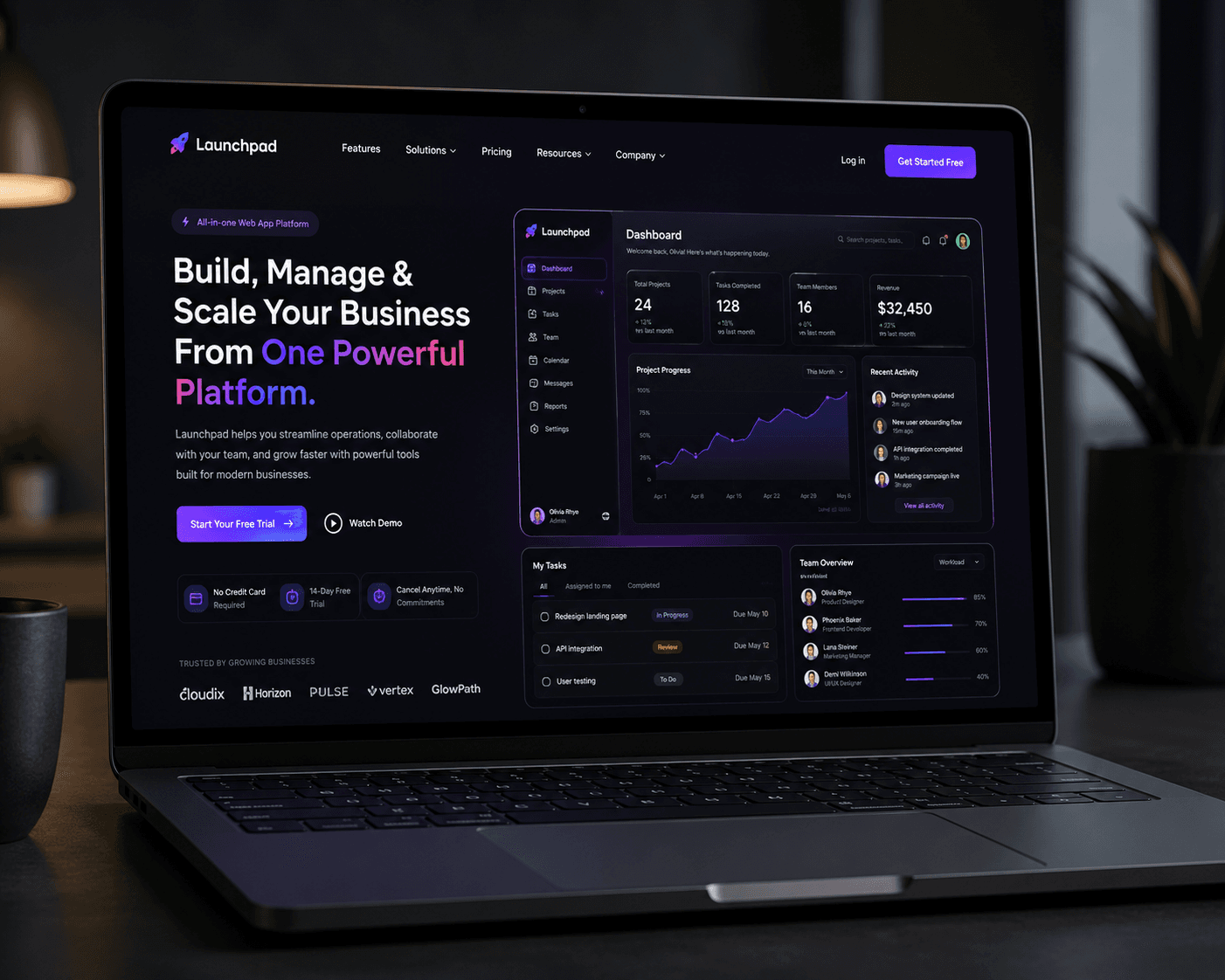
The scope is shaped around the problem, users, and priorities—not a fixed package of unnecessary features.
Subscription products with focused workflows and room for future modules.
Secure spaces for accounts, requests, documents, and service access.
Purpose-built journeys that coordinate availability, actions, and notifications.
Clear interfaces for monitoring data, status, performance, and decisions.
Appropriate account access and role-based experiences.
Connections to suitable payment, communication, and business services.
Final deliverables are confirmed during scoping and adapted to the needs of the engagement.
Teams validating or expanding a software product with a clear commercial use case.
Companies that want clients to book, submit, track, or manage services online.
Groups that need secure access to resources, profiles, and member activity.
Businesses replacing fragmented spreadsheets and manual coordination.
Customers and members can complete common tasks without unnecessary back-and-forth.
Structured data and integrations reduce duplication across separate tools.
Role-aware workflows make responsibility and status easier to understand.
A focused architecture makes future capabilities easier to plan responsibly.
Define users, outcomes, constraints, risks, and the most valuable first release.
Map flows, roles, states, and responsive interface behaviour.
Choose an appropriate architecture, data model, and integration approach.
Develop and review the application in testable stages.
Test, deploy, monitor, and prioritise improvements from real use.
A website mainly presents content and guides visitors, while a web app usually lets signed-in users perform tasks, manage data, or follow an interactive workflow.
Yes. We can define a focused first release that tests the central value and avoids carrying lower-priority features into the initial build.
Yes. Authentication, permissions, subscriptions, and payment flows can be included when they are appropriate to the product and provider requirements.
If the team needs to manage users, content, records, or operational status, we can plan an admin experience around those specific responsibilities.
We can provide continued technical support, performance monitoring, issue resolution, and planned feature improvements through Digital Support & Growth.
Tell us what you need from web app development, and we’ll help you shape a focused way forward.